 EN
EN

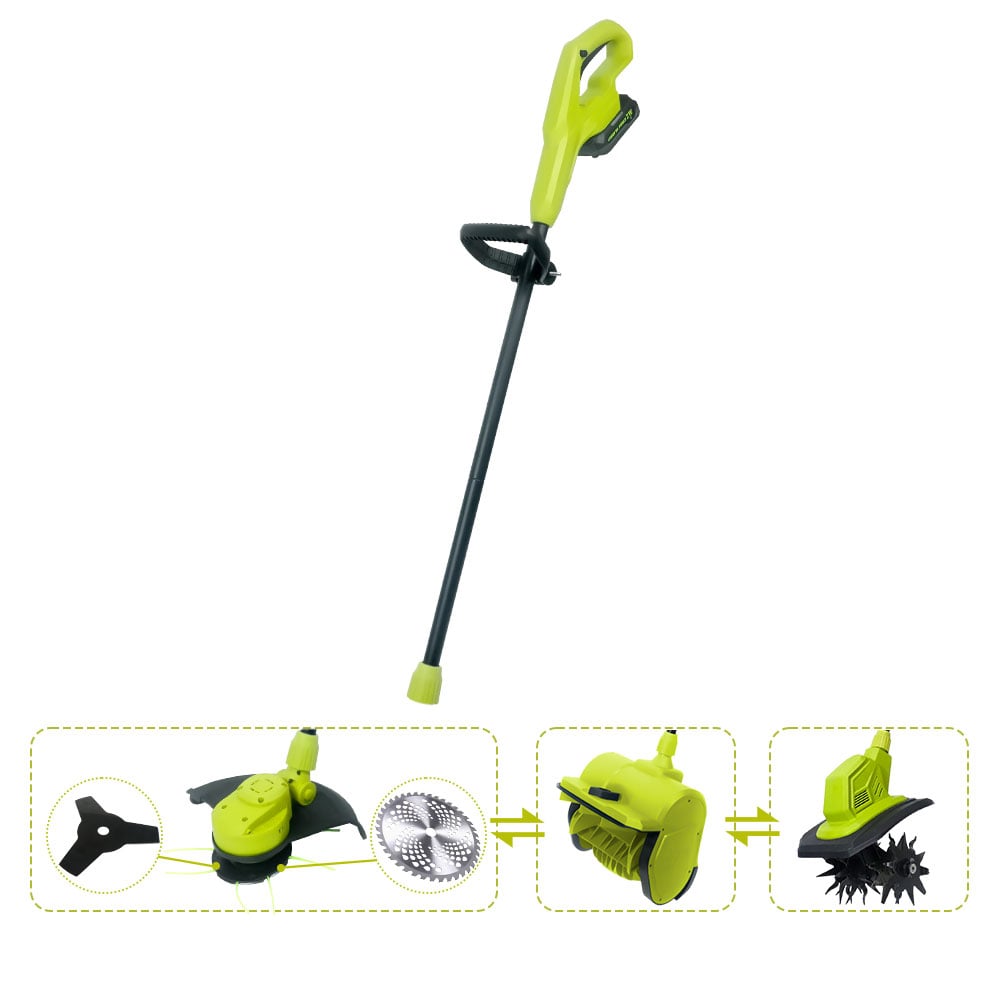
Choosing the right brush cutter in 2025 has become more nuanced than ever before. With battery technology advancing rapidly, engine designs becoming lighter and more efficient, and blade engineering reaching new levels of precision, professionals and homeowners alike face a wide range of choices that can feel overwhelming. Whether you manage a large agricultural plot, a commercial landscape operation, or a residential backyard with overgrown weeds and dense shrubbery, understanding what separates an average unit from a top-performing brush cutter is essential before you invest your money.

This guide is designed to help you navigate the 2025 market with clarity and confidence. We cover what truly defines a high-quality brush cutter, how the leading models differ by category, what features matter most for different use cases, and how to assess real-world performance beyond spec sheets. By the end of this article, you will have a solid framework for selecting the brush cutter that best matches your terrain, workload, and budget — rather than simply buying based on brand recognition or marketing language.
Understanding Brush Cutter Categories in 2025
Gas-Powered Models: Power With Trade-Offs
Gas-powered units remain a dominant choice for heavy-duty commercial and agricultural tasks. A well-built gas brush cutter delivers consistent power output even under prolonged use, making it suitable for professionals who need sustained cutting performance across long working sessions. Two-stroke engines are particularly common in this category, offering a compact and lightweight power-to-weight ratio that reduces operator fatigue during extended use.
However, gas models come with trade-offs that are increasingly relevant in 2025. Emissions regulations in many regions have tightened, making certain high-displacement engines less viable for urban or residential use. Maintenance demands, including spark plug replacement, air filter cleaning, and fuel mixing, also add long-term operational costs. For buyers who need maximum raw power and are working in remote locations where charging infrastructure is unavailable, a gas brush cutter remains a practical choice, but it is no longer automatically the top option for most users.
The two-stroke design, in particular, continues to be refined by manufacturers in 2025, with improved carburetors and anti-vibration systems that make modern gas models more user-friendly than their predecessors. If your work involves clearing thick brush, dense bamboo, or heavy scrub regularly, these models still provide an edge in sustained power delivery that battery units struggle to match on the longest jobs.
Battery-Powered Models: The Rising Standard
Lithium-ion battery technology has fundamentally changed the brush cutter landscape in 2025. Modern cordless models now deliver run times and torque levels that rival entry-level gas units, while eliminating the noise, fumes, and maintenance complexity associated with combustion engines. For residential and light commercial users, a high-quality cordless brush cutter is now often the smarter long-term investment.
Battery voltage has become a key specification to evaluate. Units operating at 40V or above offer noticeably better cutting performance through dense grass and light brush compared to lower-voltage options. Some premium models now support dual-battery configurations, effectively doubling run time without requiring a pause for charging. The best cordless brush cutter designs in 2025 also feature stainless steel blades rather than simple nylon string, significantly expanding their ability to handle woody stems and light shrubs that string trimmers cannot manage.
Portability is another major advantage of battery-powered designs. Without a fuel tank and heavy engine block, these units tend to be lighter and easier to maneuver, which matters enormously during sustained cutting sessions on slopes or uneven ground. As charging times have decreased and battery longevity has improved, the practical gap between cordless and gas models continues to narrow with each product generation.
Key Performance Metrics That Separate Top Models
Blade Type and Cutting Width
The cutting attachment on a brush cutter is arguably the single most important performance variable. Top-performing 2025 models are distinguished by their blade engineering — whether they use multi-tooth metal blades, tri-arc designs, or heavy-duty stainless steel disc blades with serrated edges. Each blade geometry is optimized for a different vegetation profile, and selecting the wrong blade for your terrain will undercut the unit's performance regardless of how powerful its motor or engine is.
Multi-tooth blades, typically featuring eight or more teeth, are designed for medium-density brush and light woody growth. They offer a balance of speed and durability that suits mixed-terrain applications. Tri-arc or three-blade designs sacrifice some cutting speed for improved safety and resistance to binding in dense material. For the most demanding applications — thick shrubs, invasive vines, and established brush — a heavy-duty disc blade with coarse serration provides the leverage needed to cut through material that would stall or damage lighter blades.
Cutting width varies significantly across the 2025 market, ranging from around 25 cm on compact residential units to over 45 cm on professional-grade models. Wider cutting paths increase productivity per pass but also add weight and require more operator control. The best brush cutter for your needs will balance cutting width against the physical demands your terrain imposes, rather than defaulting to the largest available option.
Shaft Design and Ergonomics
Shaft configuration directly affects how a brush cutter handles in the field. Straight shaft designs transmit power more efficiently and are generally preferred for professional-grade units working in open terrain. Curved shaft models sacrifice some efficiency for improved maneuverability around obstacles like tree roots, fence posts, and garden beds, making them popular for residential applications with complex layouts.
Handle design has received significant attention from manufacturers in 2025. The best models now feature padded loop handles or bicycle-style D-handles that allow the operator to maintain a natural grip angle, reducing wrist and shoulder strain during extended sessions. Some top models include adjustable handle positioning, which is particularly valuable for operators of different heights or for switching between sloped and flat terrain without reconfiguring the equipment.
Anti-vibration systems are now considered standard on quality brush cutter models rather than a premium feature. Chronic vibration exposure is a recognized occupational health concern for frequent users, and leading 2025 designs incorporate rubber-isolated drive shafts, dampened engine mounts, and vibration-absorbing grip materials. Evaluating a unit's anti-vibration performance should be a priority for anyone who intends to use their brush cutter for more than occasional weekend tasks.
Matching the Right Brush Cutter to Your Use Case
Residential and Light Maintenance Use
For homeowners and light-duty users, the priority is typically ease of use, low maintenance, and sufficient cutting power for grass, weeds, and occasional light brush. In this category, battery-powered brush cutter models dominate the 2025 recommendations for good reason. They start instantly, require no fuel management, and produce far less noise than gas alternatives — an important consideration for residential neighborhoods with noise ordinances or simply considerate neighbors.
Weight is a major selection factor for residential users who may not have the upper-body strength or endurance of a full-time landscaping professional. Many of the best 2025 residential-grade units weigh under 4 kilograms, making them genuinely manageable for extended sessions without a shoulder harness. A brush cutter in this weight class paired with a stainless steel blade and a 40V lithium battery can comfortably handle the vegetation management needs of most residential properties with significant ease.
Runtime expectations also need to be calibrated realistically. Most residential users work in sessions of 30 to 60 minutes, which aligns well with the charge capacity of modern lithium-ion batteries at the 40V tier. Having a second battery on hand eliminates any downtime concern entirely, and the total cost of two batteries plus the unit rarely exceeds the cost of a comparable quality gas model when maintenance and fuel costs are factored into the comparison over three to five years.
Professional and Commercial Applications
Commercial landscapers, agricultural workers, and land-clearing professionals have fundamentally different requirements from residential users. For these buyers, a brush cutter must deliver reliable performance across multiple consecutive hours, withstand daily use without mechanical degradation, and be supported by accessible spare parts and service networks. Durability, not just performance, becomes the primary investment criterion.
In the commercial segment, two-stroke gas models and high-voltage battery platforms split the market. For operations with extensive equipment charging infrastructure, high-capacity battery platforms with interchangeable batteries across a tool ecosystem offer compelling operational economics. For operations working across large remote properties where charging infrastructure is impractical, purpose-built gas brush cutter units remain the most reliable solution through 2025.
Commercial buyers should pay particular attention to shaft material quality, gearhead construction, and blade mounting robustness. These are the mechanical components that fail first under heavy commercial use, and units that use superior materials in these areas — hardened steel gearheads, reinforced blade guards, and quality alloy shafts — will outlast cheaper alternatives by several seasons even under demanding conditions. Total cost of ownership, not purchase price alone, is the correct metric for professional brush cutter evaluation.
Evaluating Brush Cutter Reviews and Specifications Critically
What Specs Actually Tell You
Manufacturer specifications provide a useful starting point but require careful interpretation when evaluating a brush cutter purchase. Engine displacement in cubic centimeters or motor wattage in electric models gives a general sense of power capacity, but actual cutting performance depends heavily on how that power is translated through the drivetrain, blade speed, and cutting attachment design. A unit with a slightly lower displacement but a superior gearhead and blade can outperform a higher-displacement competitor on real terrain.
Battery capacity, measured in amp-hours (Ah), and voltage together determine the energy available for a cordless brush cutter. Higher voltage at the same Ah rating delivers more power, while higher Ah at the same voltage delivers longer runtime. The best 2025 models offer thoughtful combinations of both rather than maximizing just one dimension, recognizing that most users need both performance and practical working duration.
Weight specifications are sometimes reported without the battery or cutting attachment, which can mislead buyers comparing total operational weight. Always confirm that reported weights are complete ready-to-use weights. For a brush cutter that will be used in a shoulder harness or handheld for extended periods, even a 500-gram difference in total operational weight translates into meaningful physical fatigue differences across a full workday.
Reading User Reviews With Context
User reviews are a valuable but imperfect source of guidance for brush cutter selection. The most useful reviews are those that clearly describe the terrain type, vegetation density, and usage frequency of the reviewer. A review praising a lightweight unit's performance on a flat lawn offers limited guidance to someone who needs to clear a steep hillside with established woody shrubs — the products might be perfectly matched to the reviewer's needs while being completely unsuitable for a different application.
Durability feedback in reviews typically only becomes meaningful after six to twelve months of consistent use. Early reviews often reflect first-impression enthusiasm rather than assessed long-term reliability. When evaluating any brush cutter, prioritize reviews that come from verified purchases with established use history and that discuss specific failure modes or durability observations rather than only immediate performance impressions.
Professional landscape and agricultural forums often provide the most contextually rich reviews for heavy-duty brush cutter models. These communities tend to have direct experience with specific failure points, seasonal performance variations, and comparative assessments against multiple competing units. For buyers considering commercial-grade investments, these sources offer more actionable detail than general consumer review platforms.
FAQ
What is the difference between a brush cutter and a string trimmer?
A brush cutter is a heavier-duty machine designed to cut dense grass, thick weeds, shrubs, and light woody growth using metal blades or heavy-gauge cutting attachments. A string trimmer uses a nylon line and is designed only for grass and soft vegetation. While some models can function in both roles with interchangeable heads, a dedicated brush cutter is the correct tool for anything beyond light grass and weeds.
How often should I service my brush cutter?
For gas-powered models, basic service intervals include checking and replacing the air filter every 25 hours of use, inspecting the spark plug every 50 hours, and checking the gearhead grease after each season or every 25 hours of heavy use. Battery-powered brush cutter models require less mechanical maintenance but benefit from blade sharpening every 5 to 10 hours of cutting, battery health checks per manufacturer guidelines, and regular inspection of the blade mount and guard for wear or damage.
Is a heavier brush cutter always more powerful?
Not necessarily. Weight in a brush cutter can reflect engine displacement, battery capacity, reinforced construction, or simply inefficient design. Modern engineering has produced units that deliver professional-grade cutting performance at weights significantly lower than older designs of similar capability. Always evaluate power-to-weight ratio rather than either metric alone when comparing models in 2025.
Can a cordless brush cutter handle thick woody shrubs?
Yes, with the right blade and sufficient battery voltage. A cordless brush cutter equipped with a multi-tooth metal blade or stainless steel disc blade operating on a 40V or higher platform can effectively cut through woody stems up to approximately 3 to 4 centimeters in diameter. For very large or extremely dense woody material requiring sustained cutting pressure, high-displacement gas models still offer a performance advantage, but modern cordless units handle the majority of residential and light commercial woody brush without difficulty.
